Beyond the Food
Pla Too Thai Cuisine
5092 S 136th St, Omaha, NE 68137
Written by Joshua Foo (I am not a writer)
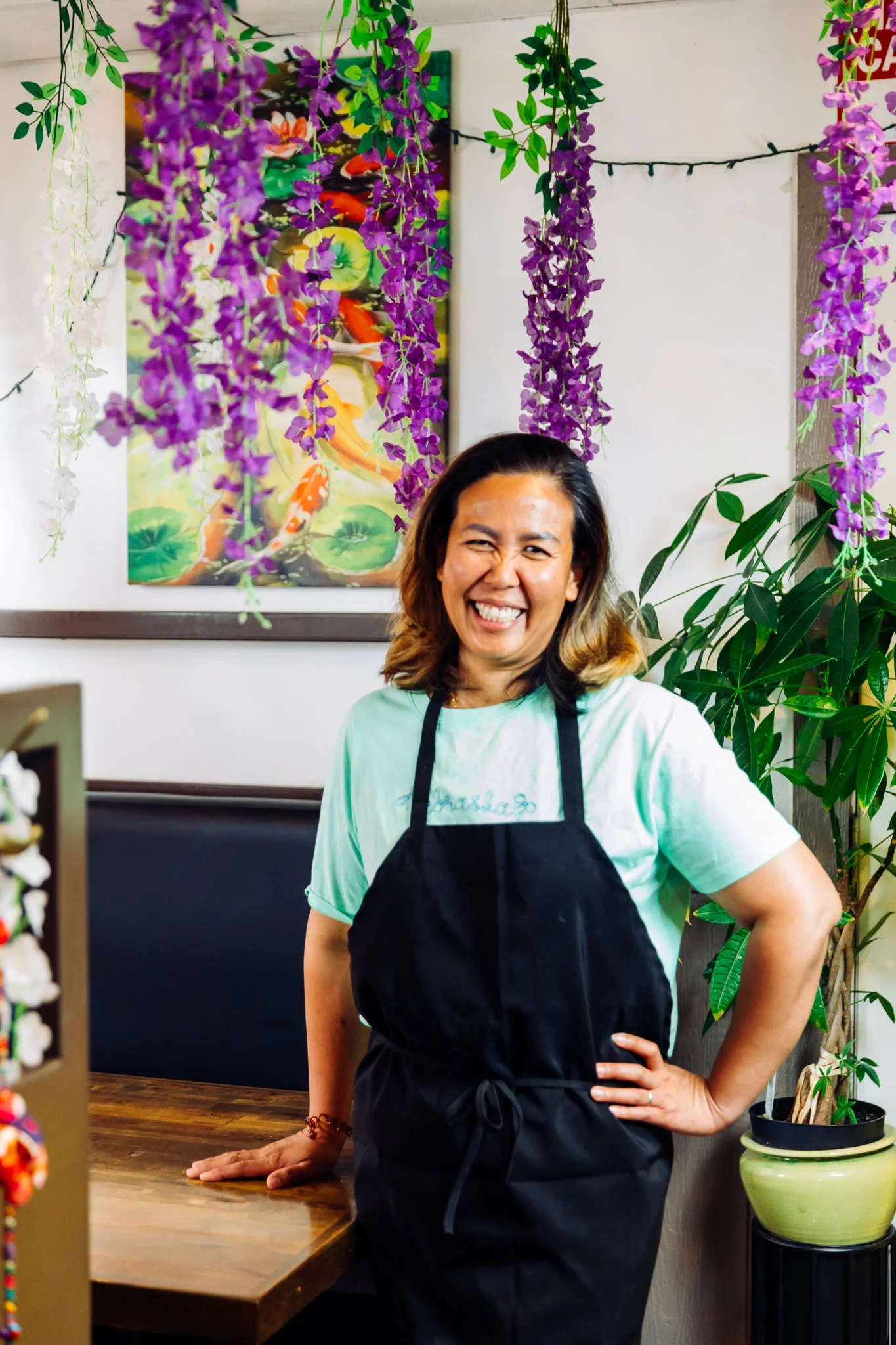
“I used to really love my hands.”
Lukpla Wirachakul looked down at them as she talked about the realities of owning a restaurant. “They were always soft because all I did was cook. Now I look at them and think, ‘No, I wash dishes.’”
She laughed, then shrugged.
“That’s what happens when you own a restaurant. Being an owner isn’t really being an owner. You have to do everything, especially in a small business.” There is a romantic idea of owning a restaurant but the reality is a little less glamorous. It’s staying after everyone has left. It’s washing dishes. It’s having to sometimes step into every role because small businesses don’t leave much room for anything else.
“People think you don’t have to know how to cook,” she said. “They think you just need money and you open a restaurant. I always tell them, ‘You can’t do that. If you don’t know how to cook, then you don’t know how the food is supposed to come out. If something goes wrong, or someone’s sick, or a cook doesn’t show up, what are you going to do?”
That belief is at the center of Pla Too Thai.
When Lukpla took over the restaurant, she inherited recipes that leaned heavily Americanized. They were familiar flavors, but they were not the food she wanted to make.
“I couldn’t even eat the food,” she said. “It was good for American people, but not for me. It was too sweet and just… not how I wanted it.” So she changed everything. “Every recipe. Completely.” It was a decision that came with consequences. “That was the hardest year. I lost all of their customers, so I had to build my own.” Starting over meant trusting her own cooking and allowing the restaurant to become something different. “I feel like the people who come here now are my customers. They’ve found us organically.”
That identity was clear in the food that came to the table.
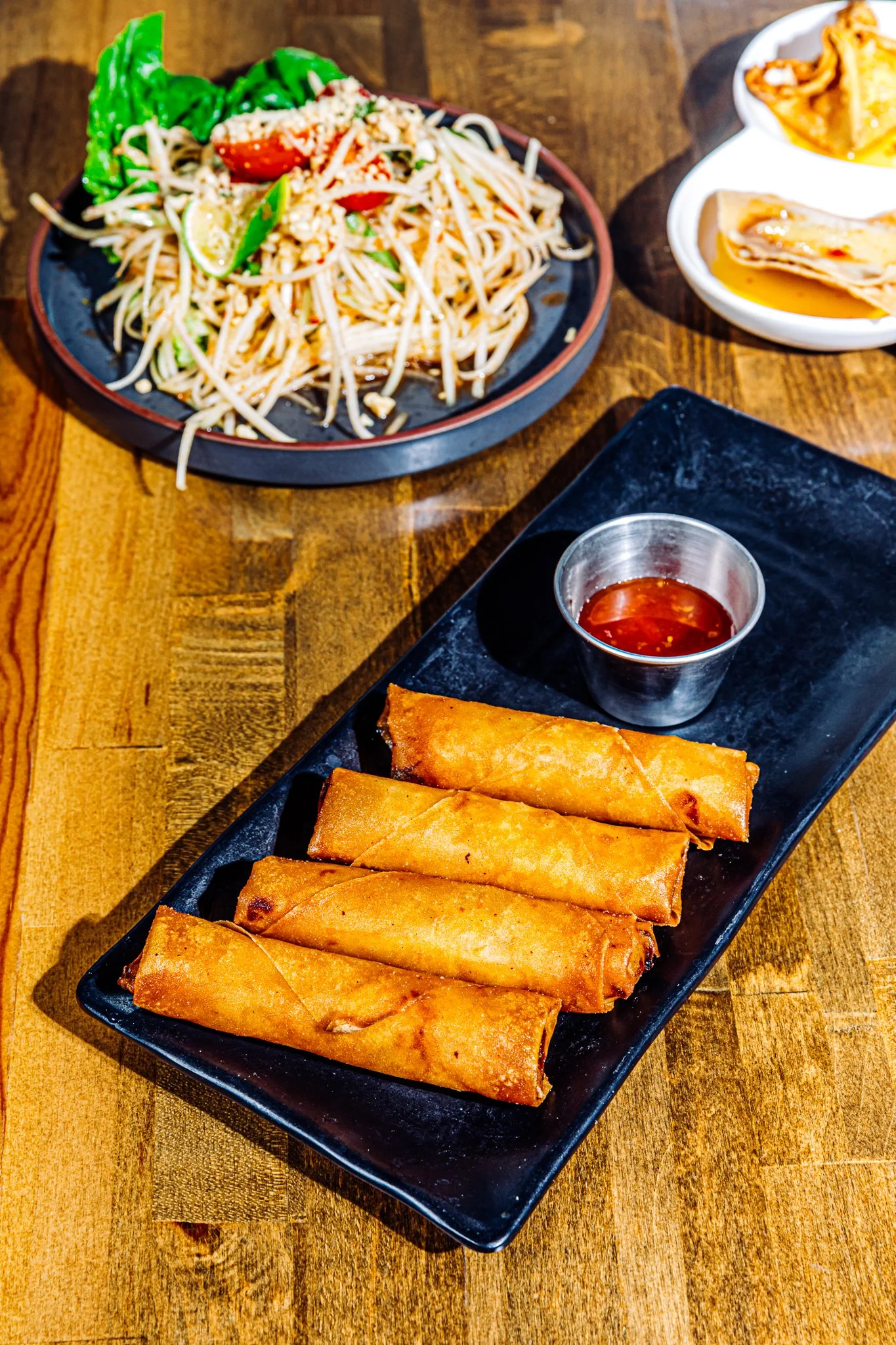
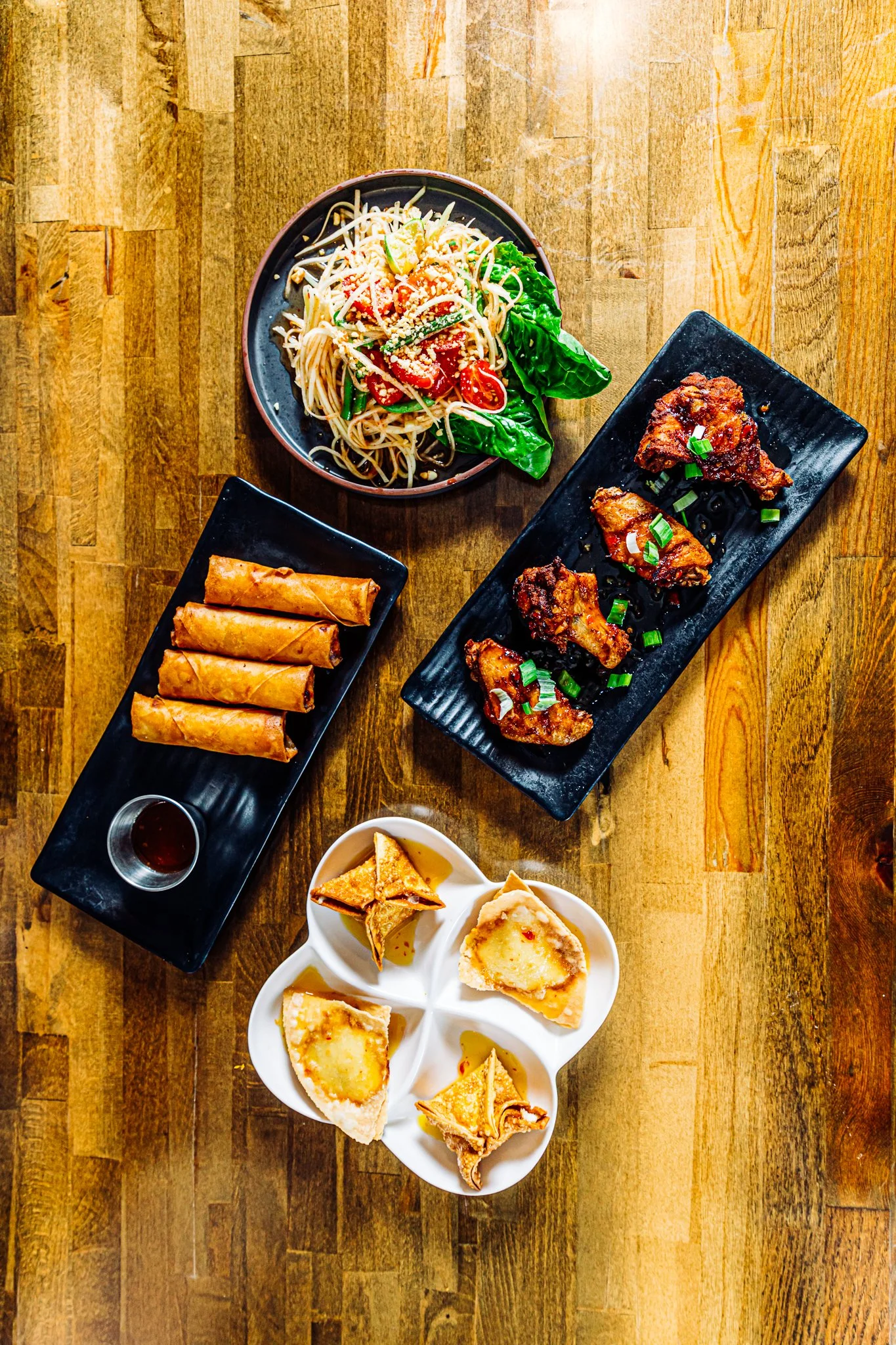
The Thai Spring Rolls arrived first, crisp rolls filled with carrots, green onions, silver noodles, and cabbage. The garlic stood out immediately, followed by the honey-chili sauce served alongside them. It was a small detail, but it said a lot. Too often, restaurants rely on overly processed bottled sweet chili sauce that tastes more like overly sweet and sugary syrup than anything resembling chili. At Pla Too Thai, even the dipping sauce was made in-house. It wasn’t just some accessory to the dish but truly part of it.
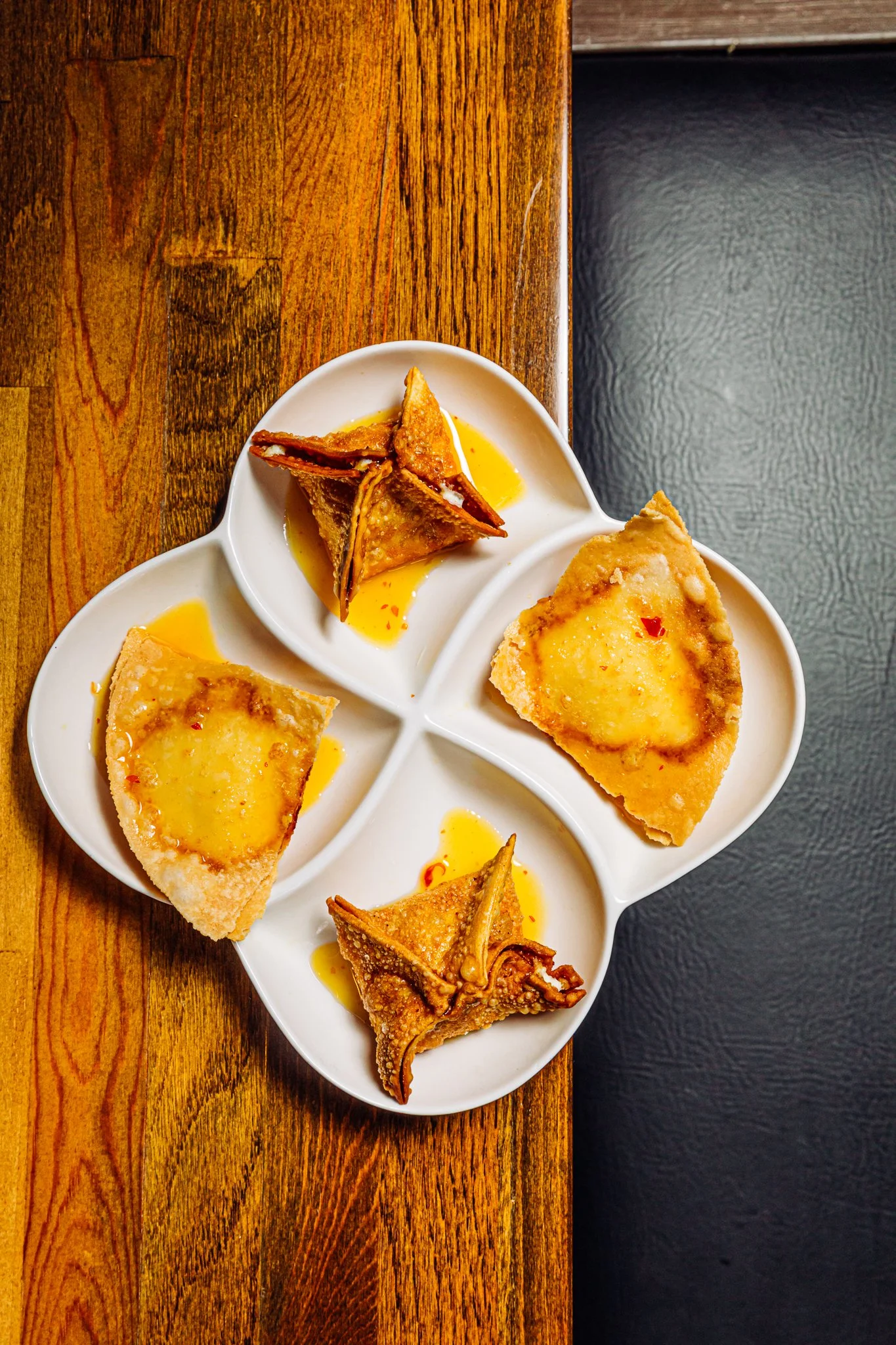
Then came the Mango Rangoon.
Lukpla brought out four: two regular and two gluten-free. Without knowing which was which, it would have been difficult to tell them apart. The wrappers were crisp, the mango and cream cheese filling balanced, and the gluten-free version carried the same texture and flavor as the original. My brother Sam and I couldn’t tell the difference between the two at all which was a nice surprise.
That attention to detail is part of why Pla Too Thai has become known for accommodating guests with allergies.
“I kept telling people, ‘That’s not going to work,’” Lukpla said. “There are so many Thai restaurants. You can open ten more Thai restaurants, but that doesn’t mean you’ll make it if you don’t have something unique.”
One of those differences became the way she approaches gluten-free dining. “Now we’re really well known for it. People use those allergy apps, and they find us that way.” Today, allergy requests make up a large portion of their business. “I’d say about 90 percent of our tickets are gluten-free.”To make that possible, the restaurant uses dedicated equipment, including a separate fryer to prevent cross-contamination. “It costs us more because we buy more expensive ingredients,” she said. “But people are willing to pay for that because they know we take it seriously.”
The same care appeared in the Papaya Salad.
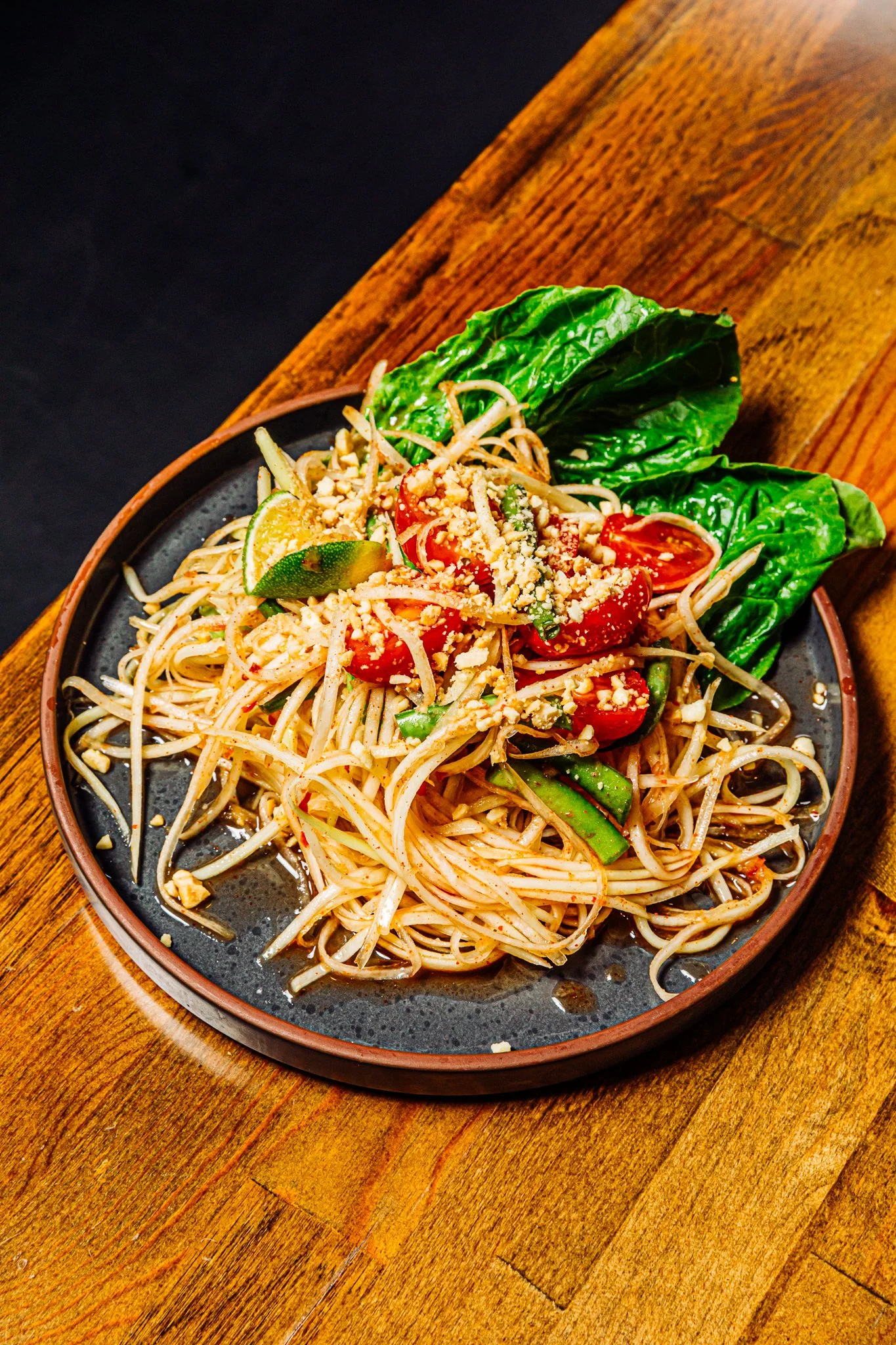
Made with shredded green papaya, tomatoes, green beans, peanuts, and lime juice, it carried a brightness that immediately stood out. Because Lukpla does not use fish sauce in her cooking, the dish moved in a different direction than many traditional versions. The lime came forward, creating a citrus-driven flavor that felt lively and clean. It was a reminder that even familiar dishes can reveal something about the person making them.
When I asked Lukpla about dishes she wished more people would try, she started talking about food that felt closer to what she would cook for Thai guests or for herself.
“There are a lot,” she said.
She pointed to the Northern-style yellow curry with noodles.
“It’s a yellow curry with noodles. The flavors are different. I really like Northern Thai food.”
If Thai friends came in, she said she might make something else entirely. “I’d make a basil stir-fry, but not the American version. No sauce. It’s very dry. Really good.”
The papaya salad changes too.
“We add salted crab and anchovy.”
“That funky flavor,” I said.
She smiled.
“That’s the traditional way.”
She explained that Thai cooking is not always about simply mixing ingredients together. There is technique involved, including using a mortar and pestle to build flavor. “I have one at home,” I told her.
That same respect for technique is what I tasted when I asked about her curry pastes and chili pastes.
She makes them herself.
“You can usually tell when a restaurant is using something from a jar,” I told her. “There’s nothing wrong with that. But your food tastes different.”
She laughed. “It’s a lot of work.”
That work happens mostly on Mondays. “Monday is my day off,” she said. “But it’s the day I work the longest.” She arrives early, unlocks the restaurant, and spends the day preparing.“I lock myself in here and do everything. I try to finish as much as I can.” Much of that philosophy came from the people who taught her. Before owning Pla Too Thai, Lukpla worked in the kitchen at Bangkok Cuisine while she was in school. “Have you ever eaten at Bangkok Cuisine?” she asked me. I nodded. “That’s the owner,” she said.
Victor was there that day helping inside the restaurant.
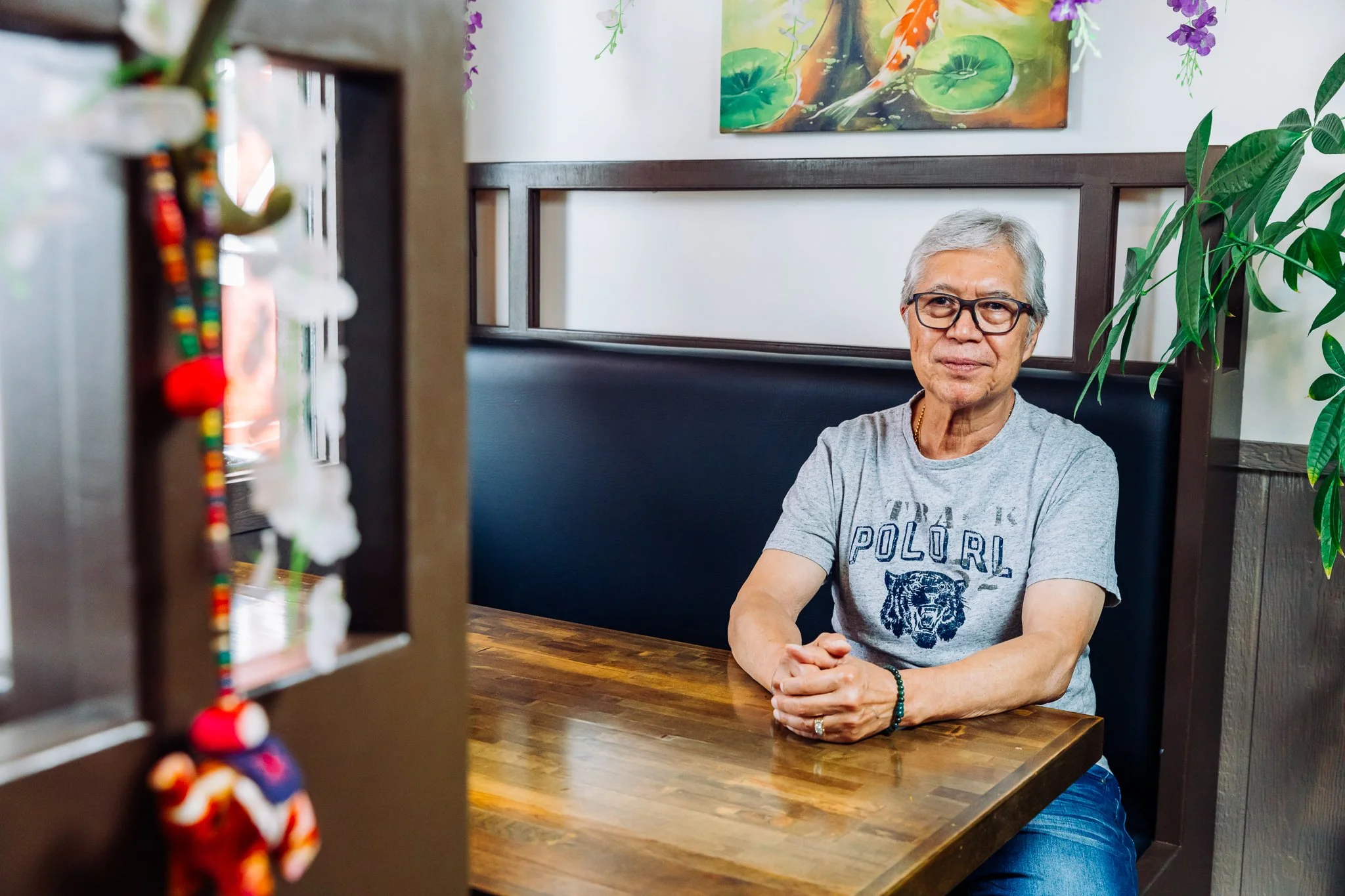
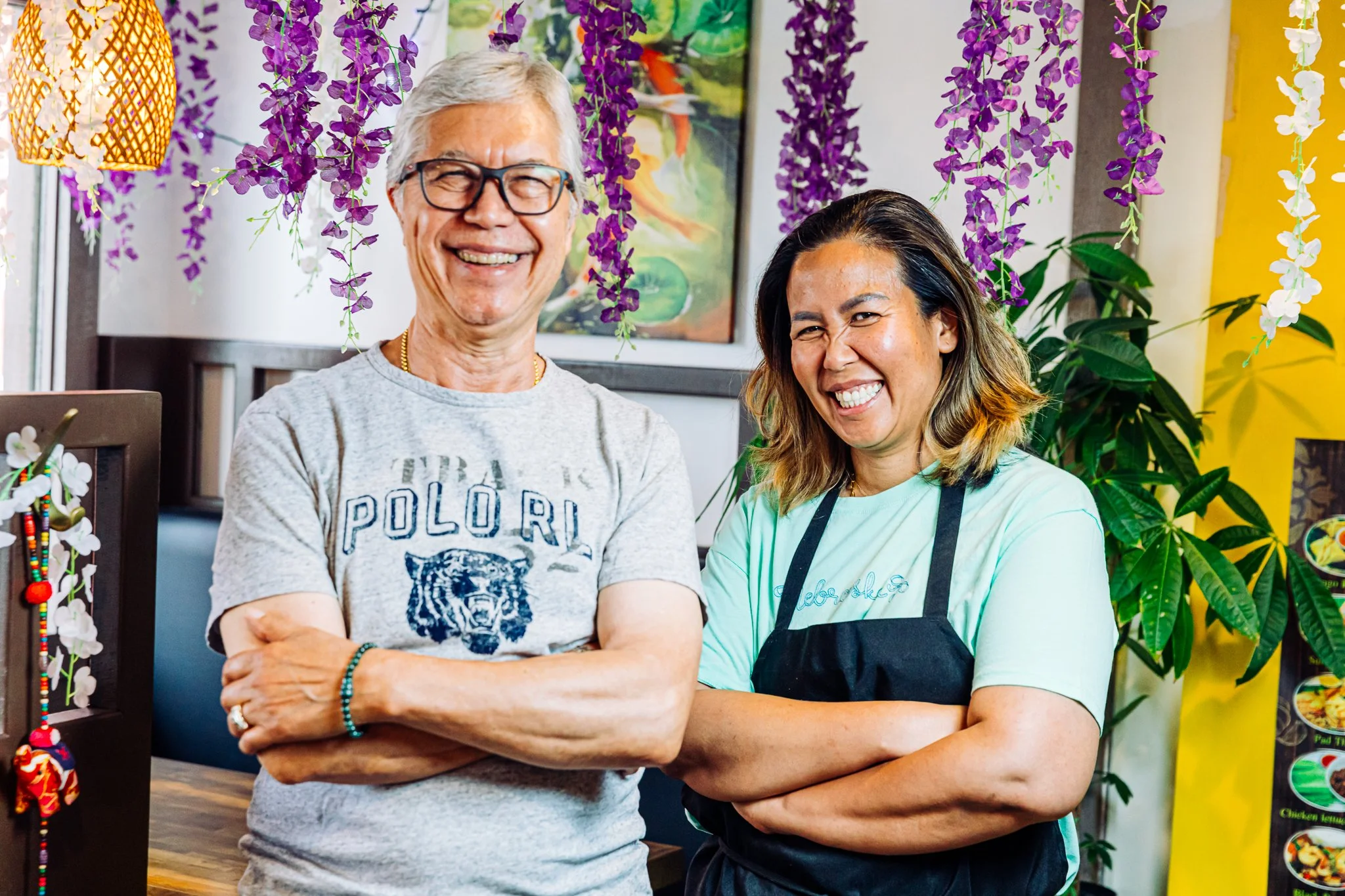
Karnkit “Victor” Boriraj the original owner of Bangkok Cuisine - Photo
It was Karnkit “Victor” Boriraj, whose original Bangkok Kitchen was one of Omaha’s defining Thai restaurants. Growing up, I ate there with my father. I still remember the restaurant’s iconic yellow door greeting guests as they walked inside. I believe it was also the first place I had ever tried a Thai Ice Tea which I have grown to love.
For Lukpla, Victor represented more than just a respected restaurateur.
“I worked for them when I was in school,” she said. “I worked in a kitchen for that. That’s how I learned to cook, from his wife too. And then my mom’s too.”
Victor’s wife taught her the importance of doing things the traditional way.
“When she taught me, she taught me how to do things from the ground.”
She would not let her rely on machines.
“She had me grind it with the mortar and she was like, ‘No, that’s not good yet. You have to do more. You have to do more.’”
Those lessons are still present in every curry paste and every sauce.
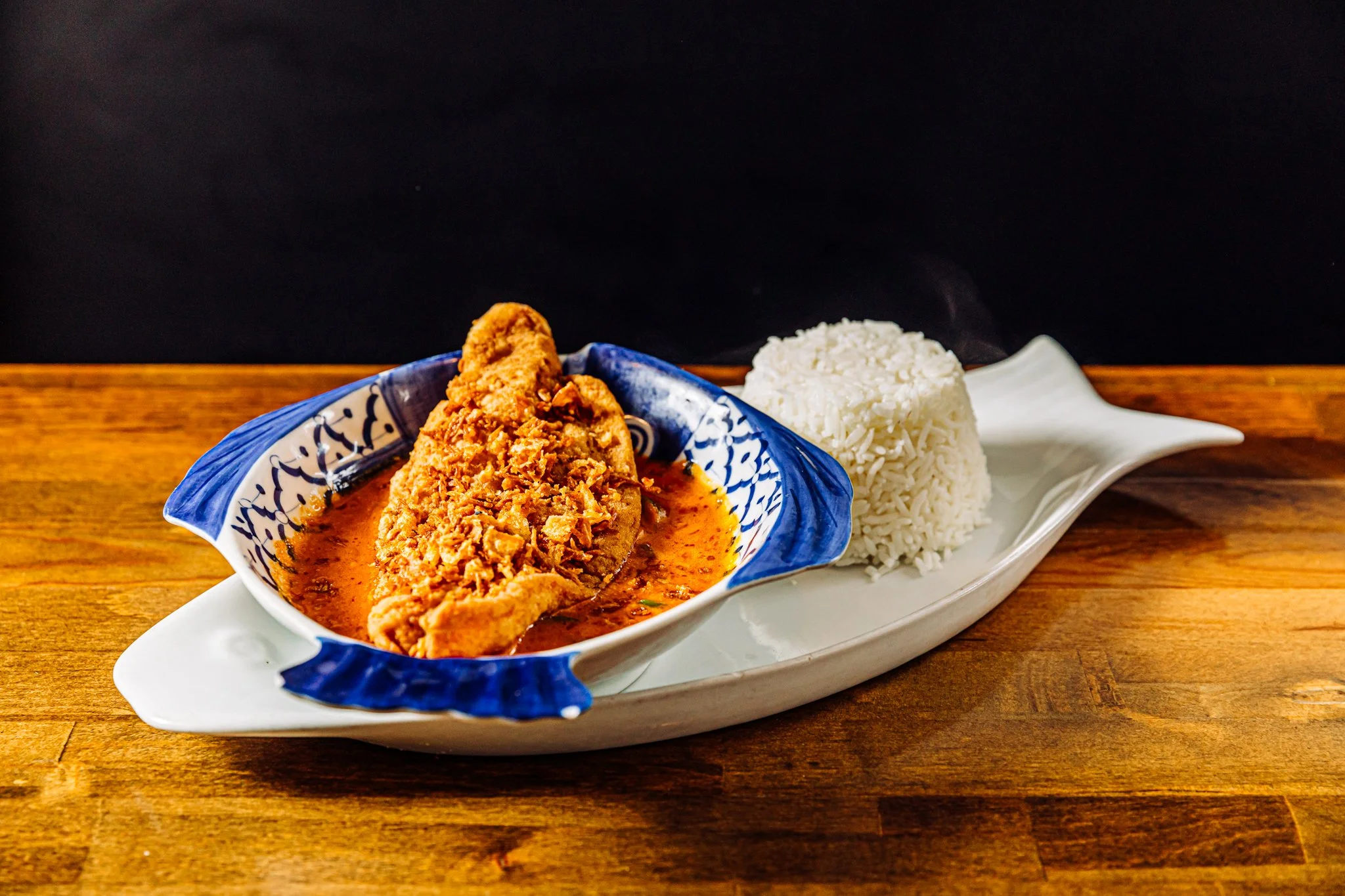
The Spicy Thai Curry Fish highlighted that immediately.
The catfish fillet was breaded and rested over peppers resting above a velvety curry. It carried heat, but the spice was not the only thing happening. The aromatic herbs and house-made curry paste created layers of flavor that felt built rather than assembled. Knowing the hard work behind that paste changed the way I tasted the dish. It was the result of hours of preparation.
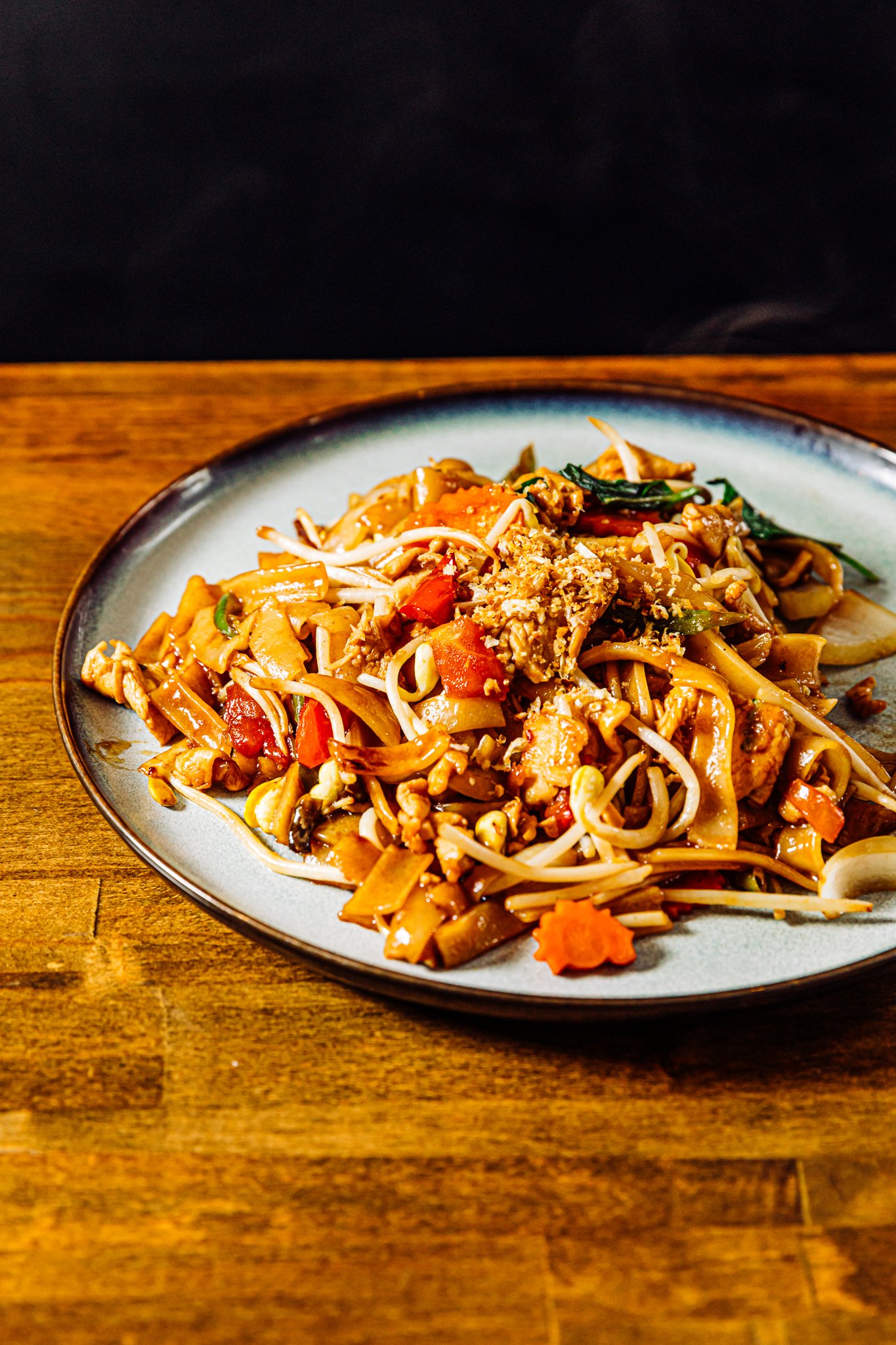
My brother ordered the Spicy Noodles with chicken.
Even tasting the dish without the chicken, what stood out most was the sauce. It clung to the noodles perfectly, carrying the flavors of basil, tomatoes, peppers, and bean sprouts without overwhelming them. The taste of fire was present in this dish, my favorite thing in Asian cooking. In Cantonese cooking, we call this Wok Hei, or breath of the wok. A smoky, complex aroma typically infused during high-heat stir-frying. A secret ingredient I always look for and love. The noodles themselves were cooked exactly right, but the sauce was what stayed with me.
Then came dessert.
Sweet Rice with Mango.
But Lukpla’s version had something unexpected.
“Is there pandan in this?” I asked.
She smiled.
“Yep.”
It was such a small addition, but it completely changed the dessert. The pandan added a fragrant, almost floral layer to the coconut sticky rice and mango. “I love when there’s an extra touch like that,” I said. “I don’t think anyone else around here does it that I know of.” She explained that even the coconut milk was prepared differently. “Even our coconut milk, we don’t just pour it straight from the can. We mix it ourselves.” The pandan itself started as a seasonal idea.“I made it for St. Patrick’s Day because it’s green,” she said with a laugh. “I thought, ‘What can I make that’s green?’ So I used pandan.”
The holiday passed.
The pandan stayed.
It was exactly the kind of detail that defined Pla Too Thai and the love and care Lukpla puts into the food. That care extends beyond the food.
“You own a restaurant, and you work in the restaurant,” Lukpla said. “It’s everything.”
Over time, many of her customers have become familiar faces. “I know almost everybody,” she said. “I say hi to everyone. They’re like family.” She looked around the dining room. “This is my safe place.” She explained that even late at night, she still feels comfortable there. “I can stay here until midnight… even two in the morning. I still feel safe here.” Even after service ends, the work continues. “I’m thinking about menus, what to post online… there’s always something. It’s not like you cook and then go home.”
She also owns a food truck, although this year it has taken a back seat.
“The food truck is just American food,” she said. “Fried food. Easy. You buy it, put it in the freezer, put it in the fryer, and sell it.”
Compared to Pla Too Thai, where so much preparation happens before service, the process is completely different. Still, it requires its own planning, scheduling, and coordination.
“This year I haven’t done much with the food truck,” she said. “We just don’t have enough help.”
When I asked if she was usually the one cooking in the kitchen, she nodded.
“I cook most of the time.”
At one point, she surprised me.
“I’m not a chef,” she said.
I laughed.
“Oh my God,” I said. “You absolutely are.”
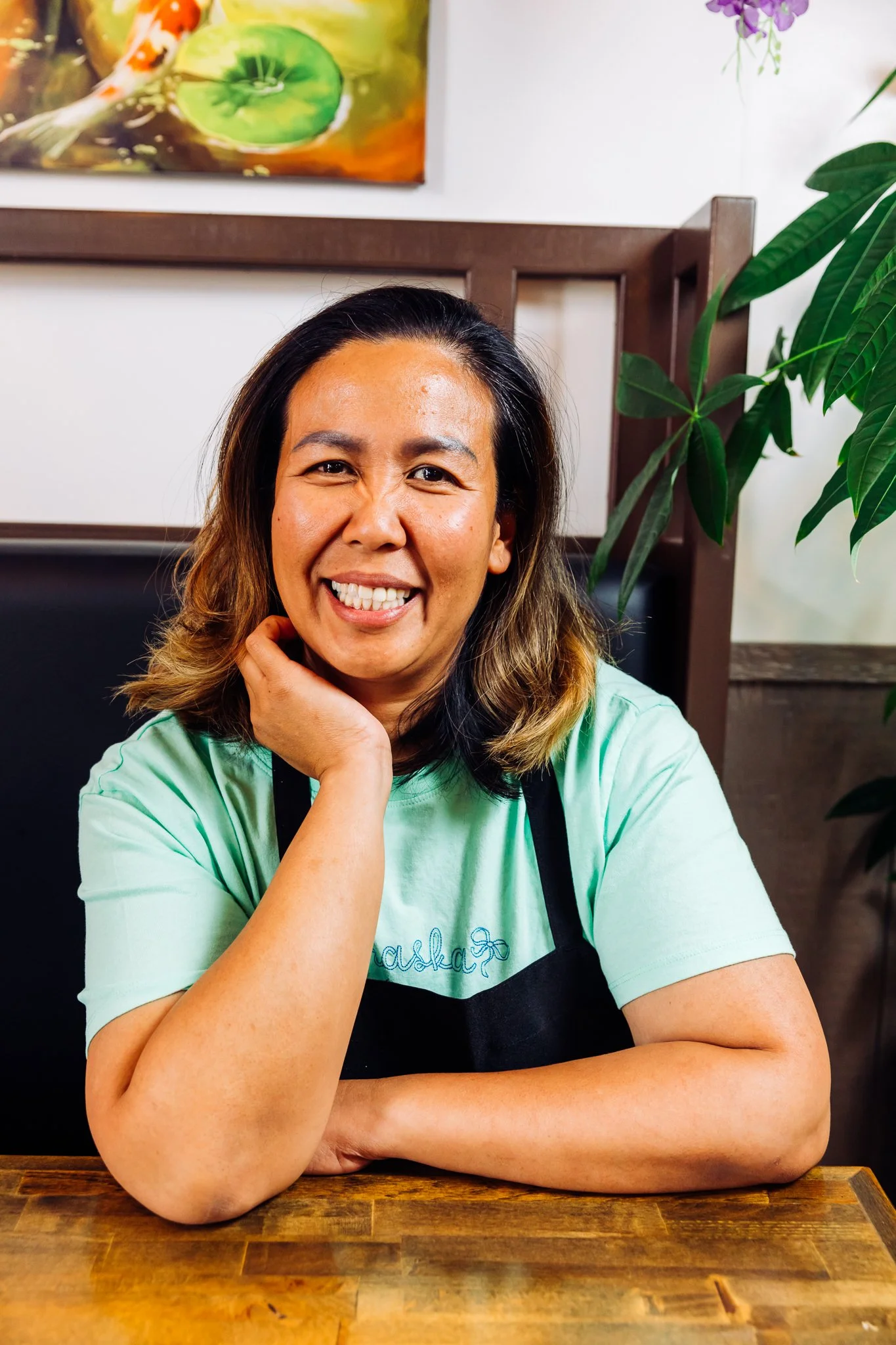
She may not use the title herself, but after hearing about the years spent learning traditional techniques, rebuilding a restaurant from the ground up, and dedicating herself to every part of the operation, it is hard to describe her as anything else.
Before leaving, I asked her about the name Pla Too Thai.
“Pla Too is actually a fish,” she said. She pointed to the illustration inside the restaurant. “That’s pla too.” It felt fitting. A restaurant named after a fish, built by someone who has spent years preserving the details of Thai cooking while creating something uniquely her own.
One of the most unexpected connections from the afternoon came from a place neither of us expected to discuss while sitting inside a Thai restaurant in Omaha.
Shenandoah, Iowa.
A small town that shaped both of our lives.
I immigrated to the United States when I was three years old and spent part of my childhood there. Before that, my father lived in Shenandoah as a foreign exchange student, which is where he met my mother. They eventually married and moved back to the Philippines.
As we talked, I learned Lukpla also had a connection to Shenandoah. She knew some of my childhood friends. A conversation that began with Thai food became a conversation about family, memory, and the unexpected ways our lives overlap. The more time I spent at Pla Too Thai, the more I realized that the most meaningful parts of a restaurant are often the ones customers never see.
The early mornings.
The techniques passed down from one cook to another.
The decisions that require more time but create a better result. The extra steps taken for someone who needs a different way to experience a meal. Those things disappear once the plate reaches the table.
But if you pay attention, you can taste them.
Hello!
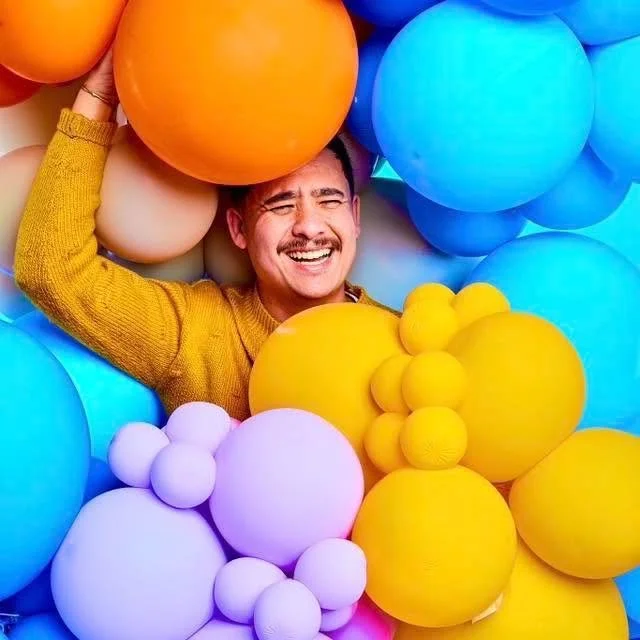
Thanks so much for taking the time to read this. I’m not a writer by trade, and this is my first story for my new series, Beyond the Food. We’ll see where it goes!
You may have noticed the chicken wings in the photos. Good eye! I wasn’t able to eat those, and unfortunately, I also wasn’t able to photograph the mango sticky rice. I can assure you, though, that it was amazing.
I actually stopped into Pla Too Thai randomly for lunch with my brother. I happened to have all of my photography gear with me, so I asked if the owner, Lukpla, would be interested in having some photos taken that she could use for her business. She graciously said yes, and somewhere between photographing the food and talking with her, I realized there was a much bigger story sitting right in front of me.
That conversation inspired me to write this piece and see where this series might go. I’m excited to explore more stories about the people, places, and lives behind the food we eat.
Thanks again for reading, and for coming along for the ride.
Love you!
Sincerely,
Joshua Foo